The short answer
Under Thailand’s Condominium Act, foreign nationals can hold freehold title to a condominium unit. The condition is that the total floor area owned by foreigners in a building does not go above 49% of the building’s total saleable floor area. Land is different: foreigners generally cannot own land outright, which is why this route applies to condominium units and not to houses.
What the 49% actually measures
- It is a share of floor area, not of the number of units. A building with many small studios and a few large units counts the square metres.
- Common areas are not part of the calculation. Separately titled parking spaces do count towards the foreign share, according to current Land Department guidance as reported by legal commentators.
- Each building has its own quota. In a project with several buildings, you check the building your unit is in.
- The check happens when ownership is registered at the Land Office. If the quota is used up by the time your transfer is registered, you cannot take freehold in that building.
How your money has to arrive
The rule is that the purchase money is brought into Thailand from abroad in foreign currency (or taken from a Thai account that holds foreign currency). The proof is a Foreign Exchange Transaction form, often called an FET or Tor Tor 3, issued by the Thai bank that receives the transfer.
- The amount on the FET should be at least the purchase price.
- Send in foreign currency to an account in your own name at a Thai bank, and state the purpose as the purchase of a condominium. Do not convert to baht first.
- Transfers above USD 50,000 normally produce an FET automatically. For smaller amounts you may need to ask for it, and banks differ in how they handle this.
- The name on the FET must match the name on the title. Money sent from a company or a third party can cause problems at the Land Office.
How to check the quota before you reserve
- Existing building: the building’s juristic person (the management office) can issue a letter showing current foreign ownership.
- Any building: a lawyer can run a title search at the Land Office that includes the quota position.
- New project: ask the developer for written confirmation of the quota, and have your lawyer verify it independently.
- Keep in mind that a quota position can change between the day you check and the day you register, and a quota reservation is not something the law guarantees.
What about leasehold or a Thai company?
A registered lease is capped at 30 years under the Civil and Commercial Code. Renewal clauses are only contractual promises: in a March 2025 judgment the Supreme Court held that lease terms beyond the first 30 years are void as property rights. Structures that use a Thai company or a Thai nominee to hold property are being looked at more closely by the authorities, and we do not recommend them. For a condominium, freehold within the quota is the cleaner route while it is available.
Proposals to raise the quota or to allow 99-year leases have been discussed. At the time of writing neither has become law, so the 49% quota and the 30-year lease cap still apply. Check the current position before you buy.
What this means at The Astra Samui
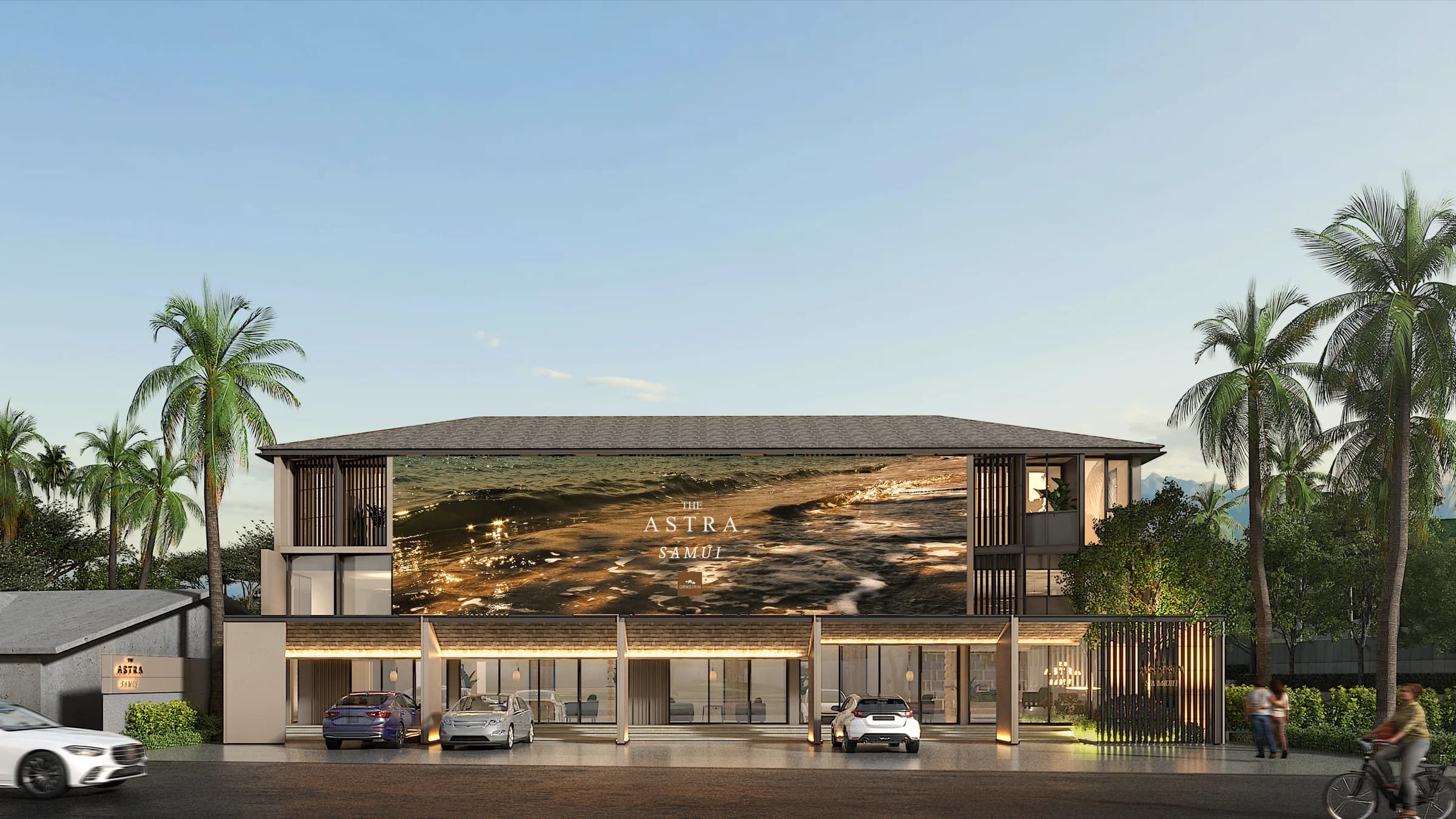
The Astra Samui has 237 residences in three buildings in Bophut, and foreign freehold is offered within the quota. Because the quota is limited and is allocated as units are registered, ask your advisor for the current quota position for the building you are interested in, and get it in writing.
Common questions
Does the 49% apply to the whole project or each building?
Each building has its own quota, so the position is checked for the specific building your unit is in.
Can I pay in baht from a Thai account?
The purchase money must come from abroad in foreign currency, or from a Thai account holding foreign currency, and be documented with an FET form. Ask your lawyer and bank how to document it for your case.
Is my place guaranteed if I reserve a unit?
No. The quota is checked at registration, so confirm the position in writing and ask what happens to your deposit if freehold turns out to be unavailable.
General information only. It is not legal, tax or investment advice and it is not a guarantee of any return. Rules change, so confirm the current position with a licensed Thai lawyer and your own tax adviser before you commit.